
If you’re researching stairlifts in Cardiff, one of the first decisions you’ll face is choosing between a straight or curved model. The right option depends on the layout of your staircase, how quickly you need installation, and your budget. Many Cardiff homeowners aren’t sure which type they require until they speak with a local specialist.
If you’d like to see the full range available locally, you can explore our stairlifts in Cardiff page for more details.
This guide explains the differences clearly, outlines typical cost considerations, and helps you decide which stairlift is best suited to your home.
What Is A Straight Stairlift?
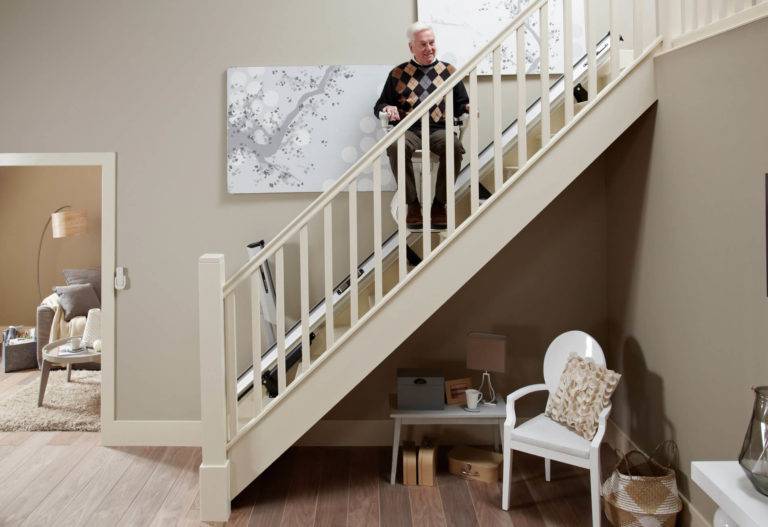
A straight stairlift is designed for staircases that run in a single, uninterrupted line with no bends, turns or intermediate landings.
The rail fits directly onto the staircase rather than the wall, and installation is usually completed within a single day. Because the rail is not bespoke, straight stairlifts are generally the more affordable option and can often be fitted quickly.
Straight stairlifts are commonly found in many Cardiff terraced homes where the staircase runs directly from the ground floor to the first floor without changing direction.
When A Straight Stairlift Is Suitable
A straight stairlift is likely to be appropriate if:
Your staircase has no curves or corners
There is no split-level landing
You require a faster installation
You are working within a tighter budget
For many households, this is the simplest and most cost-effective solution.

What Is A Curved Stairlift?
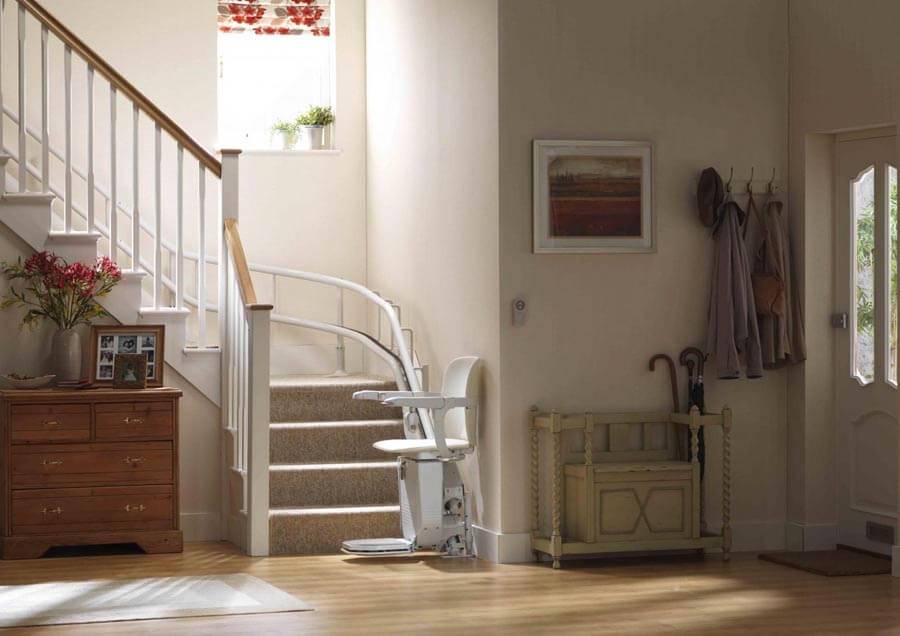
A curved stairlift is custom-built to follow the exact shape of your staircase. It is required when the stairs include bends, half-landings, corners or changes in direction.
Unlike straight models, curved stairlifts use a bespoke rail that is manufactured specifically for your home. This ensures a precise fit, particularly in properties with more complex layouts.
Many older Cardiff properties, especially Victorian or bay-fronted homes, have staircases that include turns or narrow landings. In these cases, a curved stairlift is usually necessary.
Why Curved Stairlifts Cost More
Curved stairlifts involve:
A made-to-measure rail
Additional design and manufacturing time
More complex installation
Because of this, they typically cost more than straight stairlifts and take longer to supply.
However, they provide a safe and smooth ride that follows the natural line of your staircase without compromising space.
Straight vs Curved Stairlifts In Cardiff: Key Differences
Here is a simple comparison to help clarify the differences:
| Feature | Straight Stairlift | Curved Stairlift |
|---|---|---|
| Staircase Type | No bends or turns | Includes bends or landings |
| Rail | Standard rail | Bespoke, made to measure |
| Installation Time | Often within 1 day | Usually 2–4 weeks |
| Cost | Lower | Higher |
| Best suited to | Many modern or terraced homes | Older or complex layouts |
The layout of your staircase is the deciding factor in most cases. A home survey confirms what is possible and ensures measurements are accurate.
How Much Do Stairlifts Cost In Cardiff?
The cost of stairlifts in Cardiff varies depending on several factors.
Straight stairlifts are generally the more affordable option due to their standard rail design. Curved stairlifts require custom manufacturing, which increases overall cost.
Factors influencing price include:
Staircase length
Number of bends or landings
Weight capacity requirements
Powered swivel seats
Folding rails
Upholstery choices
A professional survey provides an exact quotation based on your property rather than estimates alone.
It’s important to remember that choosing the right type for your staircase is more important than choosing the lowest price. A correctly fitted stairlift improves safety, reliability and long-term comfort.
Which Type Is More Common In Cardiff Homes?
In Cardiff, both types are regularly installed, but patterns do emerge.
Many terraced houses have straight staircases, making straight stairlifts suitable. Properties with half-landings or decorative stair designs often require curved stairlifts.
If your mobility needs are likely to change in the future, it may also be worth considering home lifts in Cardiff as a longer-term alternative.
Installation Times
Straight stairlifts can often be installed quickly once measurements are confirmed. In some cases, installation can take place within days of ordering.
Curved stairlifts require a manufacturing period because the rail is custom-built. This means installation takes longer, but the finished result fits precisely and operates smoothly around bends.
Safety & Space Considerations
Modern stairlifts are designed to fold neatly when not in use. Seats, footrests and arms all fold away to keep the staircase accessible for other members of the household.
Both straight and curved models include:
Seatbelts
Obstruction sensors
Smooth start and stop controls
Remote call buttons
If you already have a lift installed and are experiencing issues, you can find guidance on stairlift repairs in Cardiff.
Getting Advice On Stairlifts In Cardiff
If you are comparing stairlifts in Cardiff, the next step is speaking with a local specialist who can assess your staircase layout and discuss suitable options.
For more information about available models, pricing and installation, visit our Cardiff stairlifts page or contact the team directly for guidance.
Frequently Asked Questions
Are curved stairlifts more expensive than straight stairlifts?
Yes. Curved stairlifts require a bespoke rail designed specifically for your staircase, which increases manufacturing and installation costs.
How long does it take to install a stairlift in Cardiff?
Straight stairlifts can often be installed within a day once ordered. Curved stairlifts usually require a manufacturing period before fitting.
Can a stairlift be fitted to narrow stairs?
In many cases, yes. Modern stairlifts are compact and designed to fold away. A survey confirms whether your staircase width is suitable.
Do stairlifts damage the wall?
No. Stairlifts are fitted to the staircase itself, not the wall, meaning structural damage is not caused during installation.